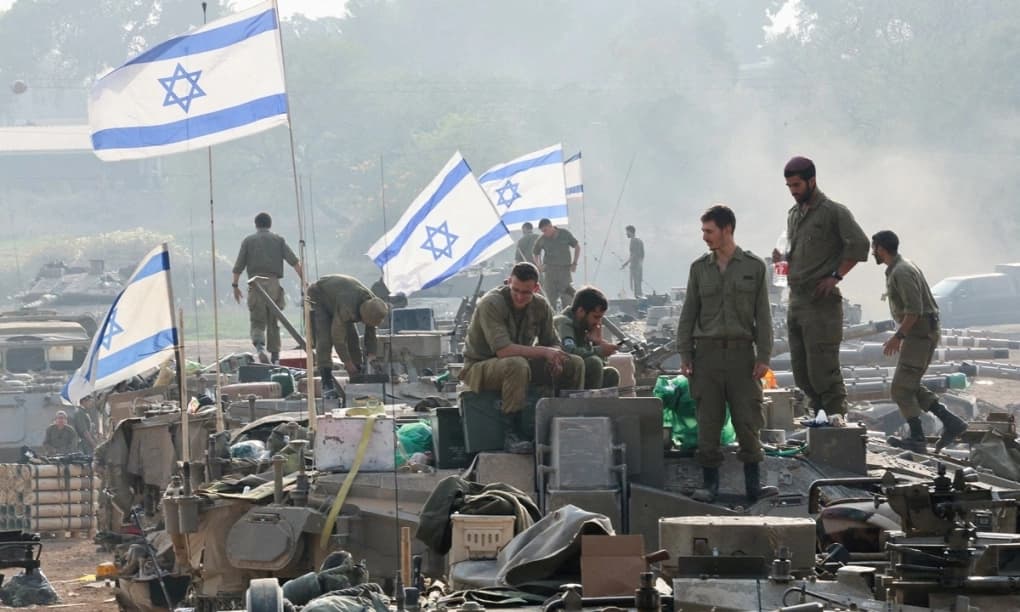
The Secret Behind Israel’s Startup Nation: Military Culture And Innovation
From cybersecurity and intelligence to startups and Big Tech, the Israeli military does more than train soldiers — it helps shape some of the world’s top founders, engineers, and innovators.
In many countries, military service is often seen as a disruption to life. Many people view it as a period of restriction, pressure, and something that slows down their personal future. But in Israel, things are almost completely the opposite. For most young people there, military service is not only a responsibility to the country, but also an extremely important milestone of adulthood.
Interestingly, Israel is not only famous for its military strength. It is also one of the countries with the strongest startup ecosystems in the world, to the point that many people call it the “Startup Nation.” With a population of just over 9 million people, Israel has one of the highest startup densities globally, estimated at around one startup for every 1,400–1,800 people according to multiple reports on startup ecosystems. This has led many people to wonder: what exactly created such a strong culture of innovation in Israel?
The Israeli military operates very differently from what most people imagine
When people think about the military, they usually imagine a strict hierarchy, absolute obedience, and rigid discipline. But the Israeli military is famous for having an extremely strong culture of debate and critical thinking. In many units, soldiers are encouraged to ask questions, argue, and propose new approaches if they believe those solutions are better for the mission.
This creates a very different environment. Soldiers are not treated like “gears” that simply follow orders. Instead, they are expected to think independently, come up with solutions, and take responsibility for their own decisions. The book Start-up Nation argued that this military environment played a major role in shaping leadership, adaptability, and problem-solving skills among young Israelis.
Many former Israeli soldiers also describe their military structure as relatively “flat.” It is not uncommon for subordinates to openly debate with their superiors if the ultimate goal is to improve mission effectiveness. This culture clearly reflects how Israeli society operates overall: prioritizing practicality and effectiveness over formality or rigid hierarchy.
Military service in Israel is not only about combat
One reason many Israeli young people are not overly afraid of military service is that the military there does not focus solely on physical training or combat skills. For many, it resembles a comprehensive talent-development environment more than traditional soldiering.
The Israeli military offers many positions related to technology, research, data, logistics, engineering, and cybersecurity. Israel currently spends nearly 5% of its GDP on research and development (R&D), one of the highest rates in the world according to data on science and technology in Israel. Because of this, it is not surprising that many of Israel’s top technology professionals previously served in the military before entering the startup ecosystem or Big Tech companies.
Today, the high-tech sector contributes around 20% of Israel’s GDP, more than 50% of total exports, and employs roughly 400,000 tech workers, according to Reuters and the Israel Innovation Authority.
Many military training programs are considered extremely high quality, especially in cybersecurity and intelligence. Instead of only studying theory, trainees are often assigned real-world problems under intense pressure and responsibility. This allows many young people to learn how to solve problems in real environments at a very early age.
In many other countries, students typically learn theory first and only face real-world challenges after entering the workforce. But in Israel, many people gain exposure to complex systems, high-intensity teamwork, and decision-making while still in their early twenties.
The military becomes a “training ground” for startups and leadership
Another unique factor is networking. During their service, many people build relationships that last for decades afterward. Those who worked together in the military often continue collaborating later in the startup ecosystem or when founding companies together.
This unintentionally creates an extremely strong talent pipeline for Israel’s technology-driven economy. Many founders, engineers, and technology experts first met during their military service. When entering the startup market, they already have networks of people who share similar experiences, mindsets, and histories of working together under pressure.
Some of Israel’s technology and intelligence units are so well known that they are viewed almost like “founder incubators.” Many successful Israeli tech startups were built by former soldiers who served in these units. Many experts believe that the culture of military service and the ability to make decisions under pressure are among the factors that contributed to Israel’s powerful startup ecosystem.
More importantly, the military environment teaches young people to take responsibility very early in life. They must make quick decisions, work continuously in teams, and solve problems under imperfect conditions. These are extremely important skills in startup culture.
Military service gradually becomes part of social culture
In many countries, high school seniors spend time thinking about which university they want to attend. But in Israel, many young people spend time considering which military unit might suit them best.
Because almost everyone in society goes through military service, it gradually becomes a “rite of passage” in Israeli culture. For many young people, it marks the transition from student life to true adulthood.
People who served in elite units or technology programs are often highly valued when entering the job market. In many cases, military experience creates a stronger impression than academic achievements in high school. As a result, military service in Israel is no longer viewed as a “disruption,” but rather as preparation for the future.
The most interesting part is not actually the military
Perhaps the most fascinating aspect of Israel’s model is not its military strength itself. What stands out more is the way the country uses the military environment to develop critical thinking, leadership, networking, and problem-solving abilities.
Israel currently has one of the highest numbers of startups per capita in the world, while also maintaining one of the world’s highest levels of R&D investment relative to population size. The country also ranks among the top nations globally in Nobel Prize winners per capita. Statistics show that Israel has a higher Nobel Prize per capita ratio than many larger countries such as the United States, France, and Germany
In many places, military service is often viewed as a period where life is “put on hold.” But in Israel, many people see it as the place where their future truly begins. Perhaps this difference in perspective is one of the key reasons behind Israel’s remarkable startup culture, innovative mindset, and strong adaptability today.
Tags
Related posts

I Replaced Redux With React Context and Regretted It: Lessons From a Growing React App
Can React Context replace Redux? I thought so too. After replacing Redux with React Context in a growing React application, I started running into re-rendering issues, scalability challenges, and unexpected performance problems. Here's what I learned, when Context works well, and when Redux Toolkit is still the better choice.

React WebRTC: Failed to set remote answer sdp Fix
Spent hours debugging InvalidStateError: Failed to set remote answer sdp in a React WebRTC application using Simple-Peer and Socket.IO. The real issue was not the SDP itself, but duplicated signaling events, incorrect signaling states, and React lifecycle behavior. Here is the actual cause and the fix that finally worked for me.

How to Use Google Maps More Effectively With Features Most People Don’t Know About
Most people only use Google Maps to get from point A to point B. But after using it almost every day for years, I realized the app has a lot of small but incredibly useful features that most users completely overlook. From saving parking locations and downloading offline maps to checking Street View before visiting unfamiliar places, these are the Google Maps hacks that have quietly helped me save time, reduce stress, and make everyday travel much more convenient.